Fresh chestnuts are perishable
Tips On how to enjoy
"Chestnuts Roasting on an open fire"
this holiday season
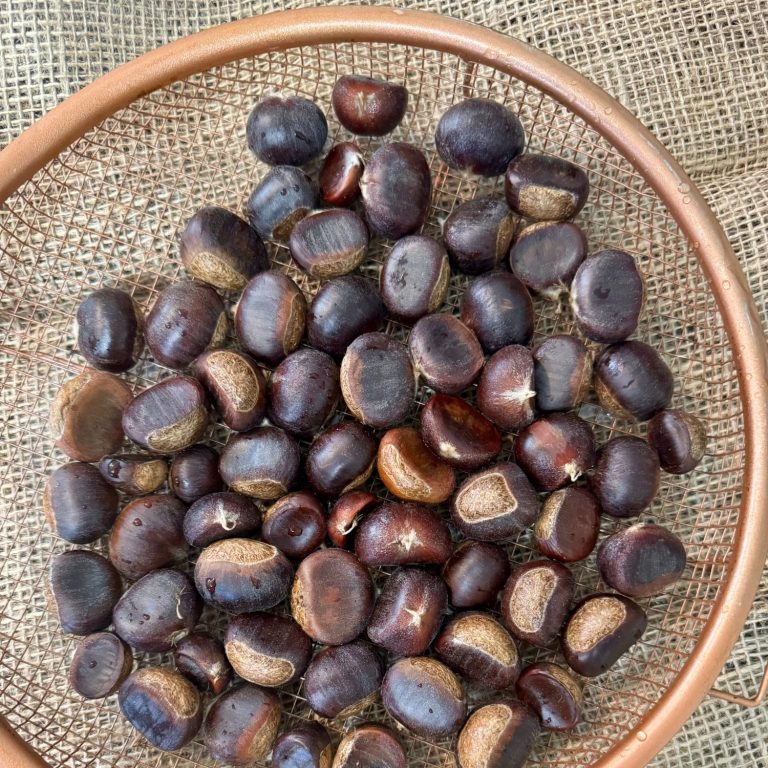
Chestnuts are different from other nuts. They are low in fats and high in carbohydrates requiring different storage methods. Chestnuts are shipped in reusable mesh bags perfect for curing in the fridge or at room temperature for the best eating experience.
Scroll down for cooking recommendations
Storage
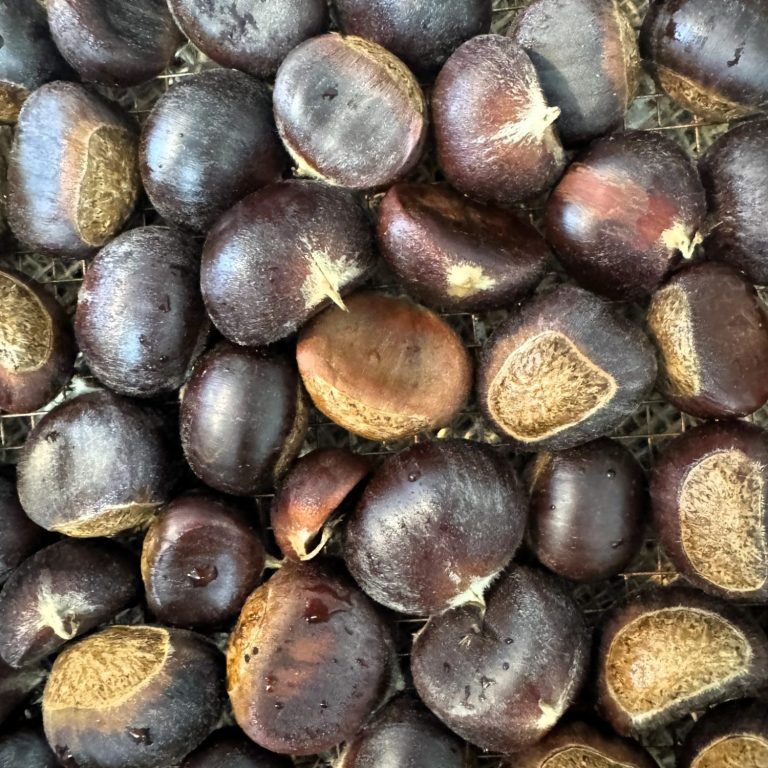
Chestnuts can last months in the fridge if properly stored. They do best at 35 degrees at 90% humidity. They need to be in a breathable container to prevent mold and spoilage such as brown paper bag or perforated plastic bag. If nuts are left open they will dry out. You can always rehydrate nuts that have dried out by soaking them in water before cooking.
Curing
Chestnuts that have cured will have superior taste as the starches have had time to convert to sugars making the nuts sweeter when eating. Curing chestnuts means letting them partially dry in their shells. You can do this by leaving them in their mesh bag in the fridge (for 2-3 weeks) or at room temperature (3-20 days depending on size). Test them by gentle squeezing to feel some "give" as air space between in kernel and shell develops. Nuts that cure too long will dry out and become hard. These can be rehydrated by soaking in water.
Quality
We encourage you to quality test your chestnuts upon arrival, weekly in storage and before cooking. Float-Test: If your chestnut floats in water, then it may be drying out or spoiled. Cut these in half to inspect the kernel. If they smell and look good, they are okay. Any outside mold is normal and can be washed off as long as the kernel inside has not been affected.
Long-Term Storage
Cook, peel, then freeze chestnut kernels for longer storage. Do not freeze uncooked chestnuts.
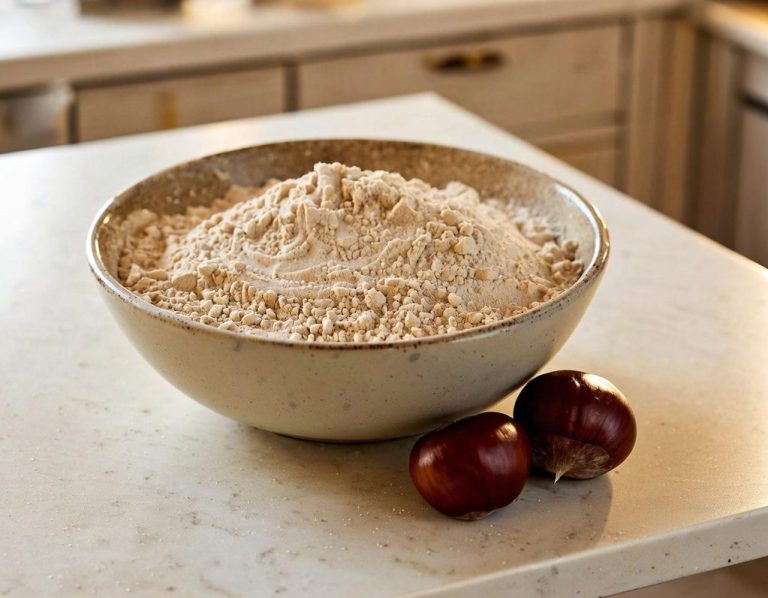
Air dry or dry in a dehydrator at 100 degrees F until 18% or lower moisture content. Rehydrate for later cooking. Alternatively, grind/mill dried kernels into chestnut flour for use for baking.
Chestnuts can be fermented to make natto foods and miso enhancing health effects of this super food.
cooking fresh chestnuts
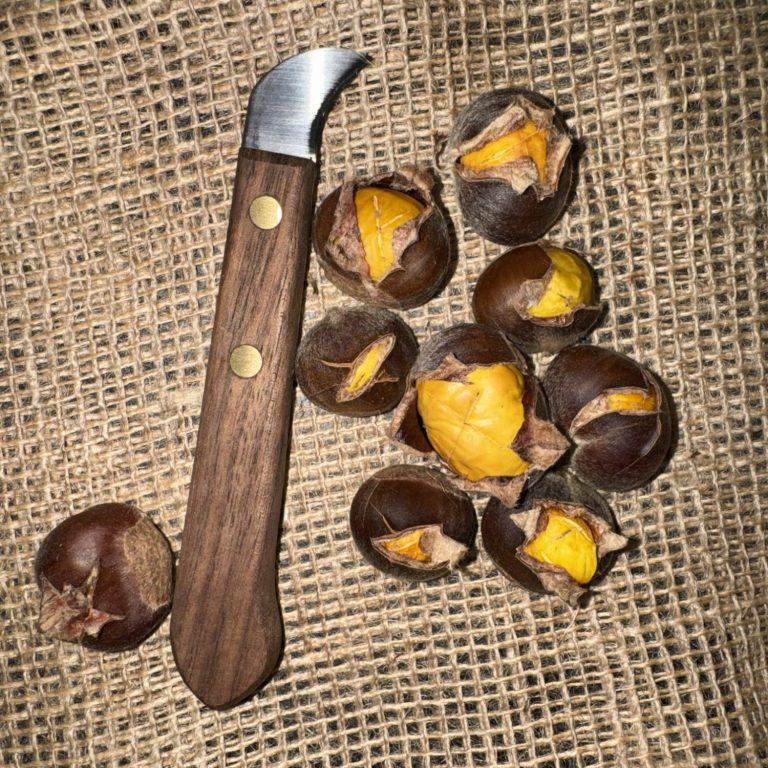
We recommend curing and soaking your chestnuts before cooking. Score your chestnuts across the rounded part of the shell before cooking or they will explode. Scoring them gives them room to expand during cooking. You can make a long cut or cut an X in the shell. We also like to cut them in half for easier peeling.
Blanching chestnuts in boiling water for about 10 minutes before roasting can make them easier to peel.
PaN Fry
Soak scored chestnuts in warm water for a minimum of 15 minutes. Drain and add nuts to the frying pan on medium heat. Cover and cook for 10-15 minutes, occasionally shaking the pan. The nuts will swell and start to open. Chestnuts are finished when soft inside. Peel and enjoy.
BOIL
Add chestnuts to boiling water. Simmer for 10-30 minutes depending on the size of your chestnuts. Peel and enjoy.
Oven Roasted
Soak scored chestnuts in warm water for 1-2 hours. Bake on cookie sheets at 375° for 25-40 minutes (depending on size). Remove from oven and place nuts in a damp towel until cool. Peel and enjoy.
Par boil & roast
Boil chestnuts for 10-15 minutes then transfer to a cookie sheet to roast at 400 degrees F for 10-20 minutes. Remove from oven and place nuts in a damp towel until cool. Peel and enjoy.
Microwave
Place cut chestnuts in a bowl with 1” of water on high 2-3 min or until shells open. Pour off hot water from bowl and fill with cold water. Wait a few minutes until cool enough to handle. Peel and enjoy.
Air Fry
Place scored chestnuts in air fryer at 375° for 15-25 minutes. Place in a damp towel when done til cool enough to eat. Cooking times vary depending on the size of air fryer. Peel and enjoy.